Building scalable AI infrastructure and cloud-native systems
Hi! I'm Yash, a Software Development Engineer in Arizona building LLM infrastructure, evaluation systems and cloud platforms.
Vantion: 0 to 200+ users, ~90% of the implementation
AI-native engineering toolkit, shipped to 8 repositories
My tech stack
- AWS
- Terraform
- Docker
- Python
- TypeScript
- Go
MS and BS in Computer Science from ASU, BS Summa Cum Laude
Cloud-native AI infrastructure at Walnutech PBC
Open to AI infrastructure roles
Connect on LinkedInSelected engineering work

pathwise: Trajectory Evaluation
Open-source (Apache-2.0) evaluation of how an agent reached an answer, not just the output.


Vera: Agentic Personal Assistant
Production PWA with tool use, a read/write/act permission model, and per-call cost accounting.


MCaaS: Model Compression as a Service
MS Thesis: Achieved 14x model size reduction and 3.4x faster inference with less than 4% accuracy loss.


LLMOps: Serverless LLM Service
Serverless LLM service on AWS with Terraform IaC, Langfuse telemetry, and GitHub Actions OIDC CI/CD.


Pulumi + Snowflake IaC Pipeline
Infrastructure-as-code pipeline provisioning AWS and Snowflake resources with Pulumi.



ZipRide: Ride Sharing Simplified
A full-stack ride-sharing app supporting real-time ride booking and payments.

PowerPathway: Let's Do It
A fitness web app for browsing exercises and building workout routines.

VoyageAI: Travel Smarter
An AI-driven travel planner crafting personalized trip itineraries.
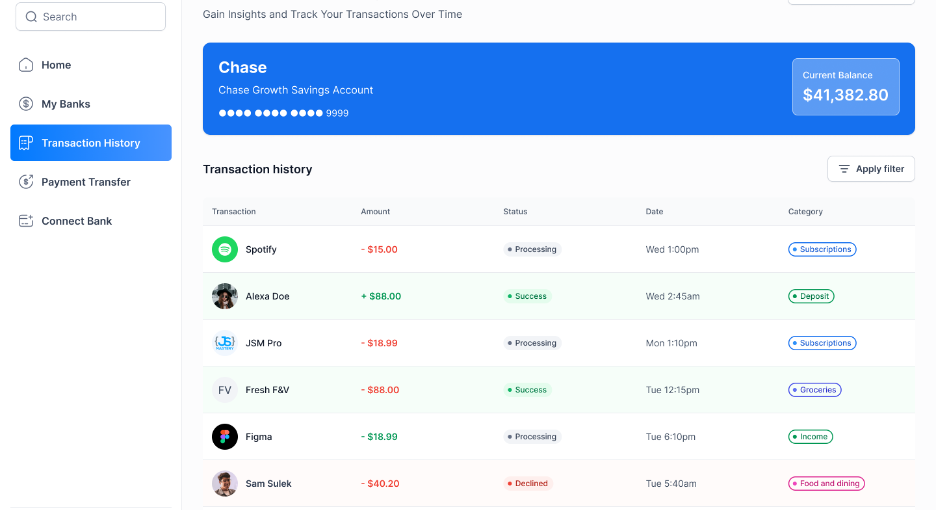
WealthWay: Meet Finance Goals
A secure banking app allowing users to monitor real-time bank accounts.
My work experience

Software Development Engineer @Walnutech PBC
- Built Vantion, the company's product, from zero to 200+ users, personally responsible for ~90% of implementation across backend, ML, infrastructure, console and frontend
- Replaced a 3GB MindsDB sidecar with a pgvector hybrid search engine over 43,000+ scholarships, cutting average query latency by 5x, eliminating 120s bootstrap time and reclaiming 4GB memory per ECS task
- Built production LLM evaluation harnesses (LLM-as-judge with calibrated scoring and regrounding, multi-turn A/B, reranker calibration) and ran model-selection studies that drove production decisions on measured quality and cost rather than intuition
- Authored an organization-wide AI-native engineering toolkit: 15 workflow skills, custom agents and safety hooks distributed to 8 repositories via an internal plugin marketplace
- Designed cloud-native infrastructure across a multi-account AWS organization with IAM Identity Center and SCP guardrails, reducing access requests by 65%

Software Developer @United Portraits
- Built SMS Manager, a Twilio messaging platform with batch scheduling, opt-out tracking and quiet-hours enforcement
- Raised the organization's Twilio compliance score from 78% to 94% within 4 weeks, sustaining 98.6% weekly compliance
- Shipped on Angular 21 and Spring Boot 4 with Keycloak, PostgreSQL and Docker Compose behind Nginx

Cloud & ML Researcher @VISA Research Lab
- Engineered a serverless infrastructure automation pipeline (MCaaS) on AWS scaling to 100+ executions/month, reducing manual ML compression effort by 90% and deployment failures by 42%
- Orchestrated distributed workflows using AWS Step Functions, achieving 14x model size reduction and 3.4x faster inference with less than 4% accuracy loss
- Built on Python, PyTorch, Docker and Terraform across ECS Fargate, S3, Lambda and Step Functions
My approach
- Phase 1
Measure before optimizing
Turn subjective output quality into reproducible signal: LLM-as-judge with calibrated scoring and regrounding, multi-turn A/B evaluation, and model-selection studies decided on measured quality and cost rather than intuition.
- Phase 2
Build it reproducibly
Infrastructure as code with Terraform and Pulumi, containers on ECS Fargate, and telemetry through Langfuse and CloudWatch. CI/CD runs on GitHub Actions with OIDC, per-task IAM roles and secrets held in SSM.
- Phase 3
Enforce the rules mechanically
Operational rules belong in hooks, not documentation. Pre-execution checks refuse a production deploy from the CLI and refuse a database write against the wrong project, each one added after that failure mode happened once.